What Is a Junk Journal? A Beginner's Guide
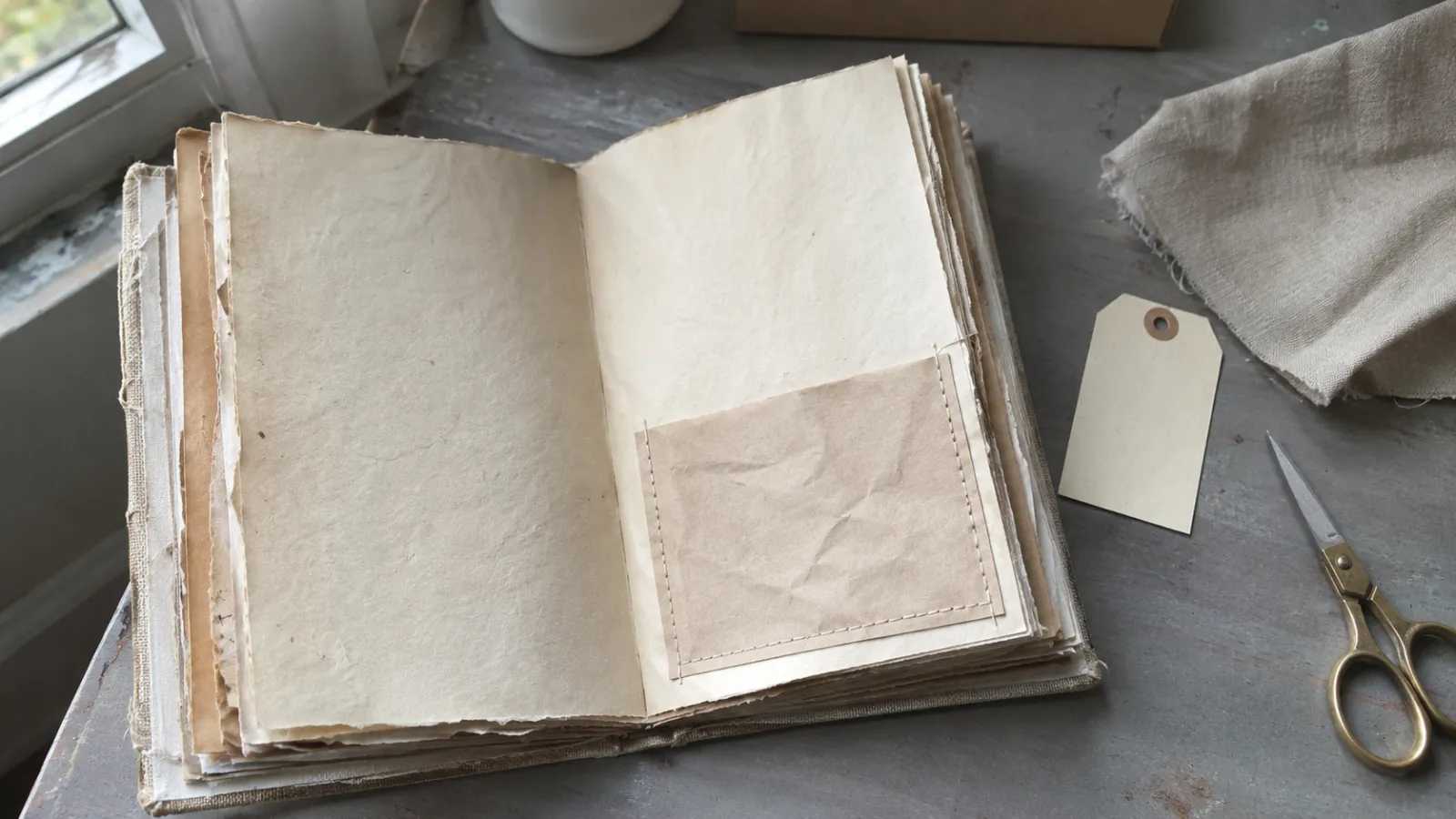
A junk journal is a handmade book made from collected, repurposed, and recycled paper. Its pages might include old book pages, discarded envelopes, packaging scraps, ticket stubs, and wrapping paper. You fold and trim these papers, then stitch them into booklets called signatures. The result is a book you can write, sketch, or collage in, with a mix of surfaces instead of the uniform blank sheets of a commercial notebook.
An expensive leather-bound diary with pristine white pages can make you hesitate before writing. You might feel you need neat handwriting or something worth saying. A junk journal is easier to be messy in. Its pages are already aged, torn, or printed before you start, so a smudge or a crooked line fits right in.
You can use a junk journal to record daily life, keep travel mementos, or practice collage and handwriting. If you intend to use your journal for reflection or creative writing, developing a daily writing routine with manageable daily targets can help you fill the pages without feeling overwhelmed. To make the book itself, you do not need expensive bookbinding machinery or imported materials. Cardboard packaging, discarded junk mail, household thread, and a sewing needle are enough for a first journal.
How a Junk Journal Differs from Other Journals
Junk journals share techniques with scrapbooks and art journals, and you can use them for some of the same things. Bullet journals are another common point of comparison. The differences come down to what you want to do with the book and which materials you use.
Junk journal versus scrapbook
A scrapbook often preserves photographs and family memories. Some makers use page protectors and acid-free cardstock, while others paste clippings and keepsakes directly onto pages. The aim is usually to collect and arrange memories, rather than to make a book out of the collected papers themselves.
In a junk journal, photographs might sit alongside bus tickets, shopping receipts, tea-stained book pages, and fabric scraps. Pages vary in height and width, leaving uneven edges and pockets to open or tuck things into. The texture of everyday paper matters more here than the long-term preservation that guides an archival scrapbook.
Junk journal versus art journal
An art journal gives you somewhere to experiment with visual art, marks, and color. Art journalers often use heavy watercolor paper or mixed-media board that can handle acrylic paint, gesso, gouache, and heavy inks.
Making the book is a large part of junk journaling. You build it from found papers instead of starting with a bound pad of heavy art paper. You can still add paint or ink, but the lighter papers vary in weight and need different adhesive techniques. Pockets, tuck spots, and room to write usually take up more of the book than they would in a dedicated art journal.
Junk journal versus bullet journal
A bullet journal is a system for tracking tasks, appointments, habits, and long-term goals. It uses an index and rapid-logging symbols to help organize entries. You can start in an ordinary notebook; the official Bullet Journal guidance on choosing a notebook recommends using one you like.
A junk journal has no standard grid or fixed scheduling system, and you do not have to learn a set of symbols. Add calendars or dated notes if you want them. The pages do not need to follow a sequence: you can collect paper fragments and reflections wherever they fit, rather than organizing the book around future tasks.
What Goes Inside a Junk Journal
You probably have some of the materials at home already. Crafters group them by use: papers that form the book, ephemera to put inside it, and embellishments such as fabric trims.
Found and repurposed papers
Each signature starts with papers folded down the center. Mix paper weights and textures to get layers that feel different as you turn the pages:
- Discarded book pages: Damaged vintage paperbacks, discarded dictionary leaves, old sheet music, outdated road atlases, and discarded children's picture books add printed text and images to the pages.
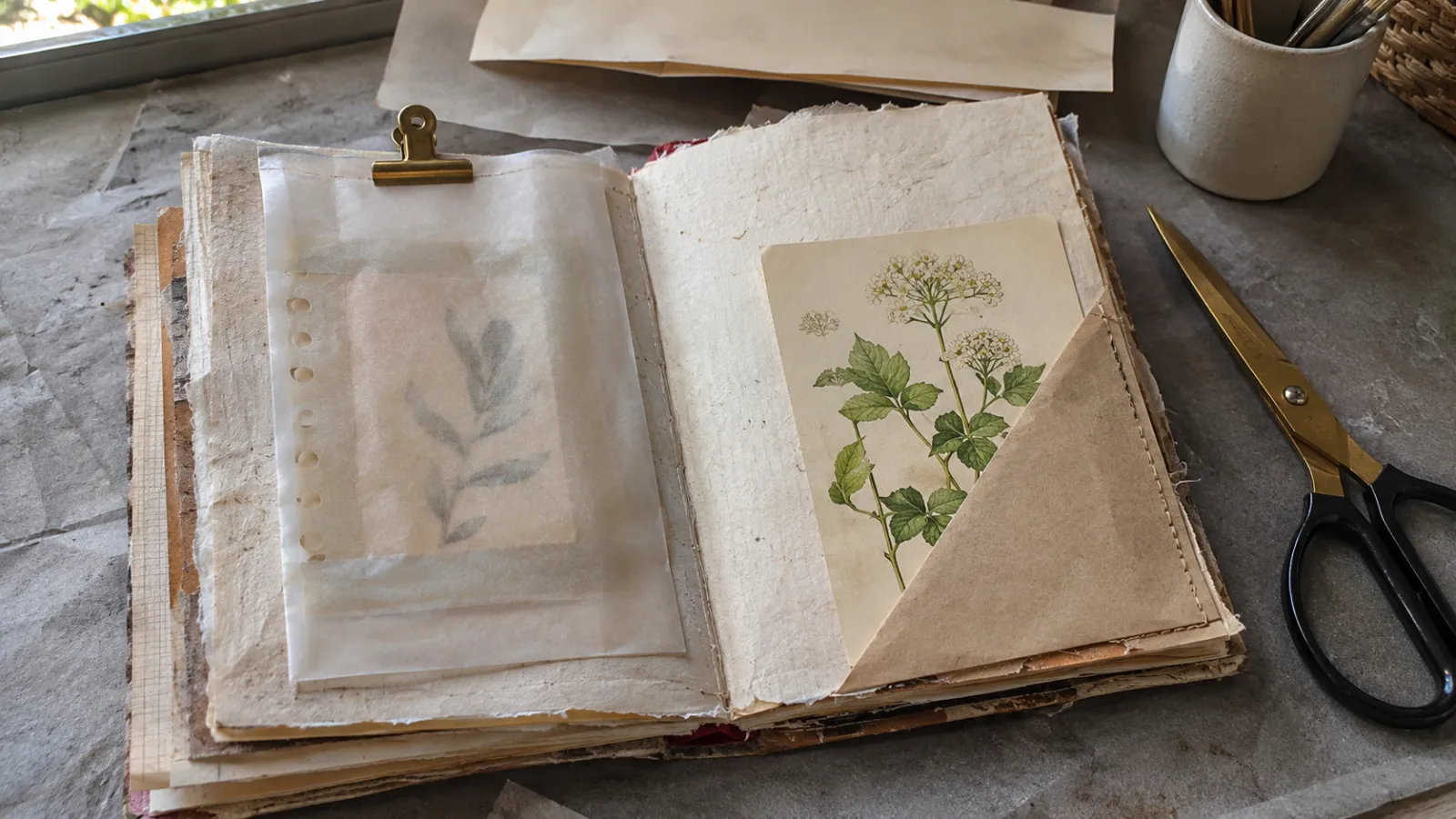
- Household mail: Security-tinted bill envelopes, brown kraft mailers, window envelopes, and greeting cards make pockets when folded into signatures.
- Practical domestic papers: Plain brown grocery sacks, parchment baking sheets, coffee filters, graph paper, and lined school notebook leaves offer varied writing surfaces.
- Decorative wrapping: Brown parcel wrap, gift wrap remnants, glassine bags, tissue paper, and wallpaper samples add color and see-through layers.
Ephemera and paper memorabilia
The term ephemera refers to paper items originally meant for short-term use, such as tickets, trade cards, and labels. The Library of Congress guide to scrapbooks and albums notes that scrapbooks have long held newspaper clippings, pamphlets, documents, and other assorted items. In a junk journal, such scraps decorate the pages and keep traces of the past:
- Transit and entertainment tickets: Metro passes, movie stubs, parking receipts, and boarding passes record particular moments.
- Packaging and tags: Clothing price tags, tea bag packets, bakery labels, cigar bands, and matchbook covers add varied shapes and bold graphic designs.
- Postal elements: Cancelled postage stamps, vintage postcards, postal receipts, and airmail labels fit into pockets and tuck spots.
Fabric and tactile trims
Fabric softens a paper spread, and small offcuts or remnants are enough:
- Calico, linen, and cotton scraps for page tabs and fabric pockets.
- Cotton lace trim and rickrack along the outer edges of pages.
- Cheesecloth or gauze layered beneath paper collages to add texture without bulk.
- Jute twine, bakers twine, or cotton ribbon for tying tags and securing booklet inserts.
Archival considerations for beginners
Some found papers yellow or become brittle over time. Newsprint is especially unstable, and old adhesive can stain nearby pages. The National Archives guidance on storing family papers recommends acid-free enclosures and mounting valuable papers without glue.
For a casual art journal or daily notebook, you can use acidic vintage papers and accept the aging as part of their appearance. Take more care with irreplaceable family photographs, handwritten ancestral letters, and legal documents. Avoid gluing these directly to acidic paper. Use acid-free photo corners or put photocopies in the journal, then store the originals safely according to archival standards.
Common Uses for a Junk Journal
Without pre-printed prompts or a fixed format, you can use the book in whichever way fits your routine:
- Memory keeping and travel logs: Rather than keeping loose brochures, museum tickets, and postcards in a drawer after a trip, you can fold them directly into signatures or tuck them into envelopes bound into the book.
- Daily reflective journaling: Writing a short paragraph next to a collaged tea tag or postage stamp gives you a daily writing routine that takes less than ten minutes.
- Swatch and garden records: Press dried flower petals, staple fabric swatches from sewing projects, or tape seed packets alongside planting dates and watering notes.
- Reading and quote collection: Dedicate a journal to quotes from books, poetry excerpts, notable phrases, and lists of books finished throughout the year.
- Pure collage exploration: Use spreads simply to experiment with paper combinations, color balance, torn edges, and mark-making without needing to produce a finished, frameable art piece.
How a Simple Junk Journal Is Made
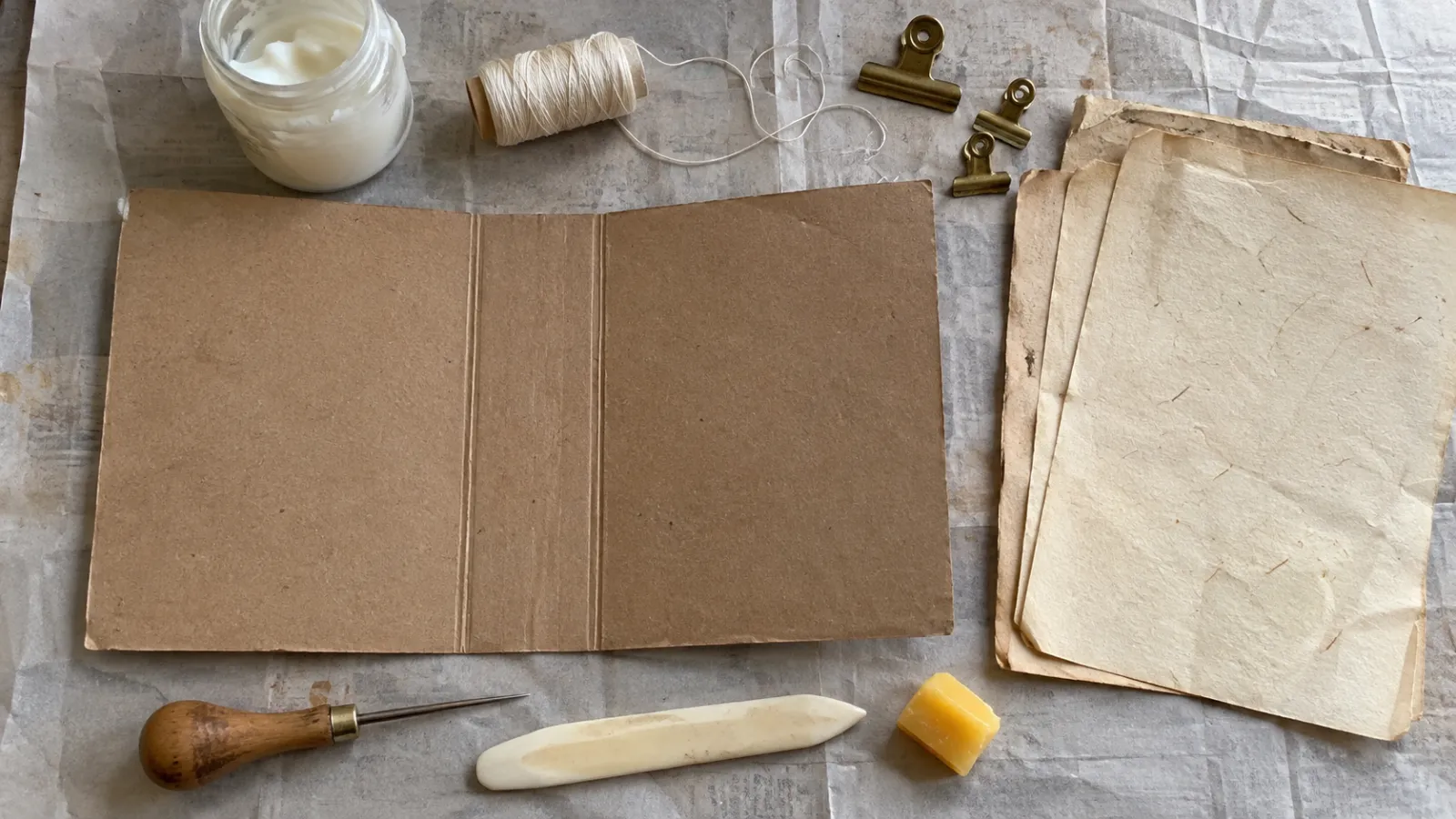
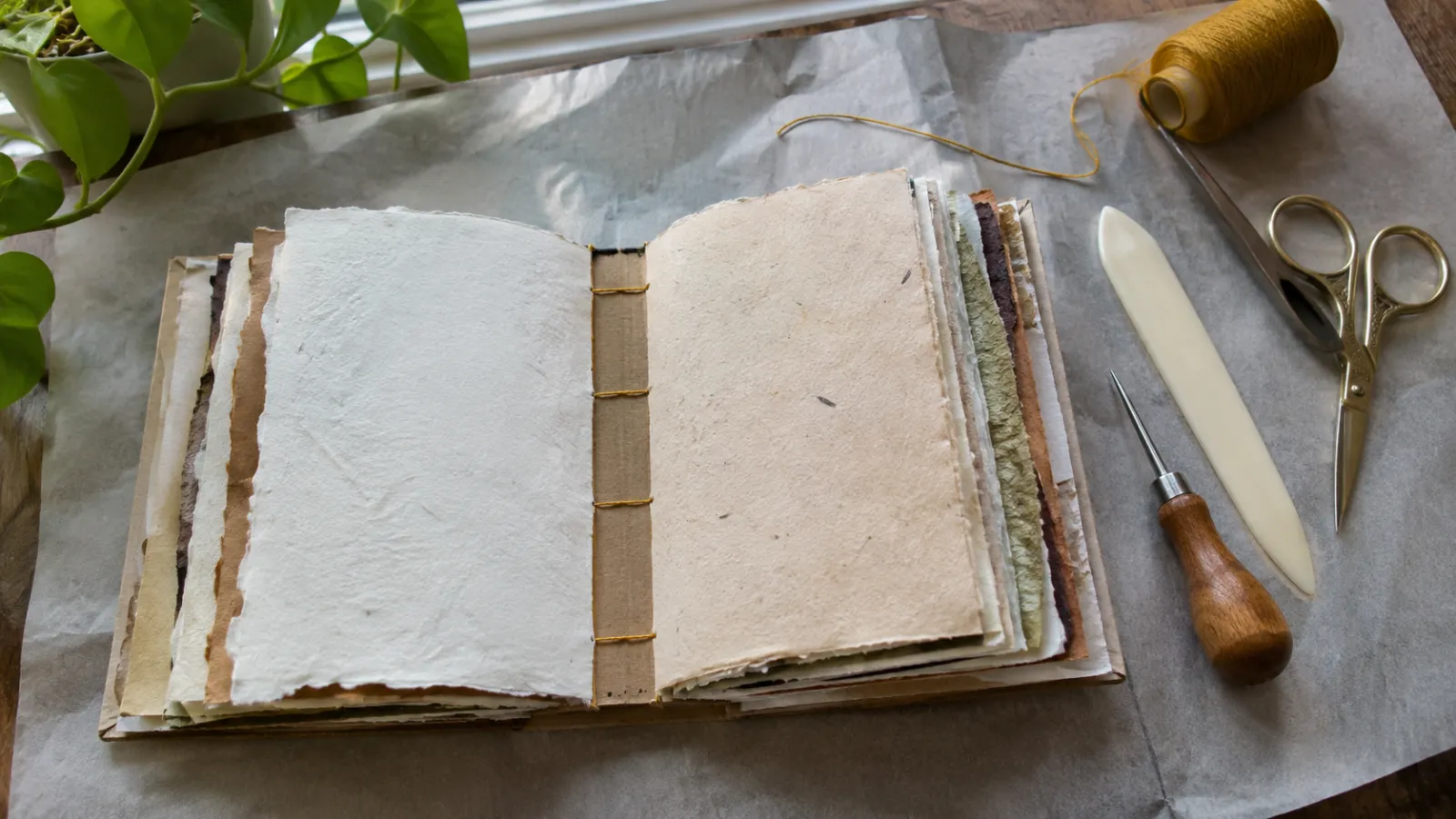
Most first journals are a single signature: a stack of folded sheets sewn into a cover with a three-hole pamphlet stitch. The cover can be an old hardcover or a piece of heavy board, the sheets can be book pages, ledger paper or anything else flat enough to fold, and the only special tools are an awl, a needle and waxed thread.
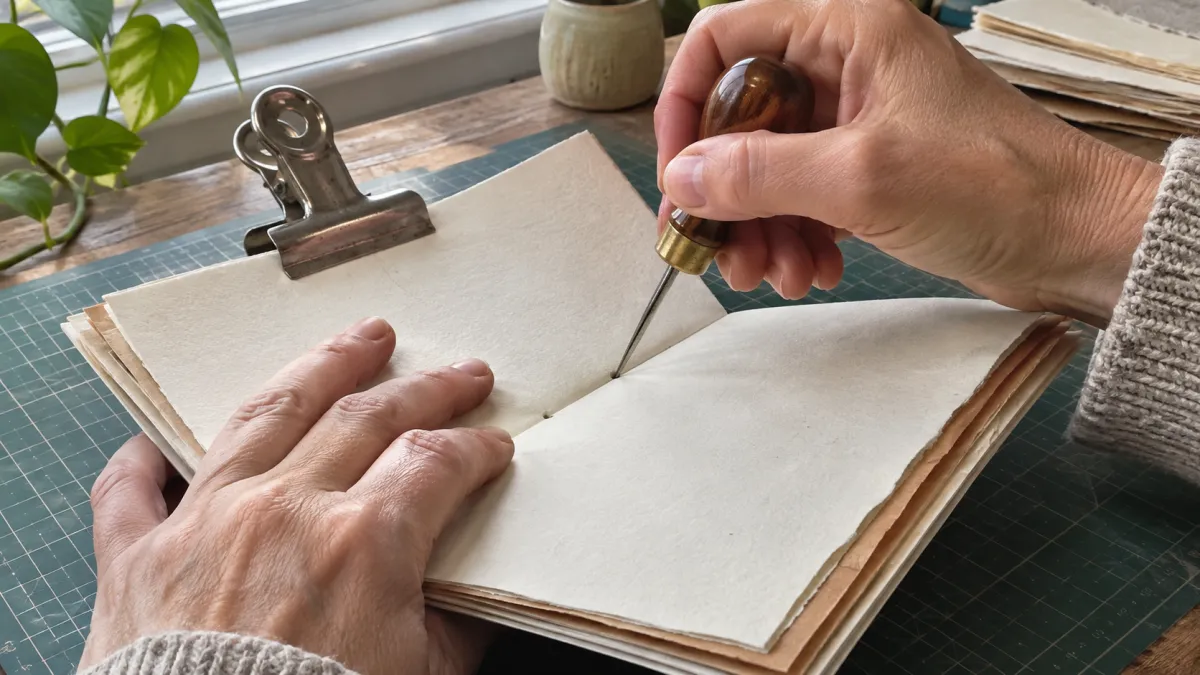
The full walk-through, with cover measurements, how to punch the holes and every step of the stitch, is in how to make a junk journal. Once the book is bound, junk journal ideas covers pages, pockets and themes to fill it.
Planning a Balanced Journal Spread
It is easy to pile too much paper in one place and find that the book will no longer close. Think about where the thicker pieces will sit as you arrange a spread.
Consider this travel spread. You have two concert tickets, a museum brochure, three transit stubs, a handwritten note, a glassine bag, and a lined paper tag to work with:
Before: Two concert tickets glued flat to the center of page one. A large folded museum brochure glued entirely flat across page two, covering the page edge. Three transit stubs glued directly on top of the brochure. A handwritten note taped over the concert tickets with masking tape.
Gluing the large items flat stiffens these pages and leaves little space to write. It also takes a lot of adhesive, which wrinkles thin book paper. The masking tape will dry out and discolor over time.
The same materials can fit more comfortably like this:
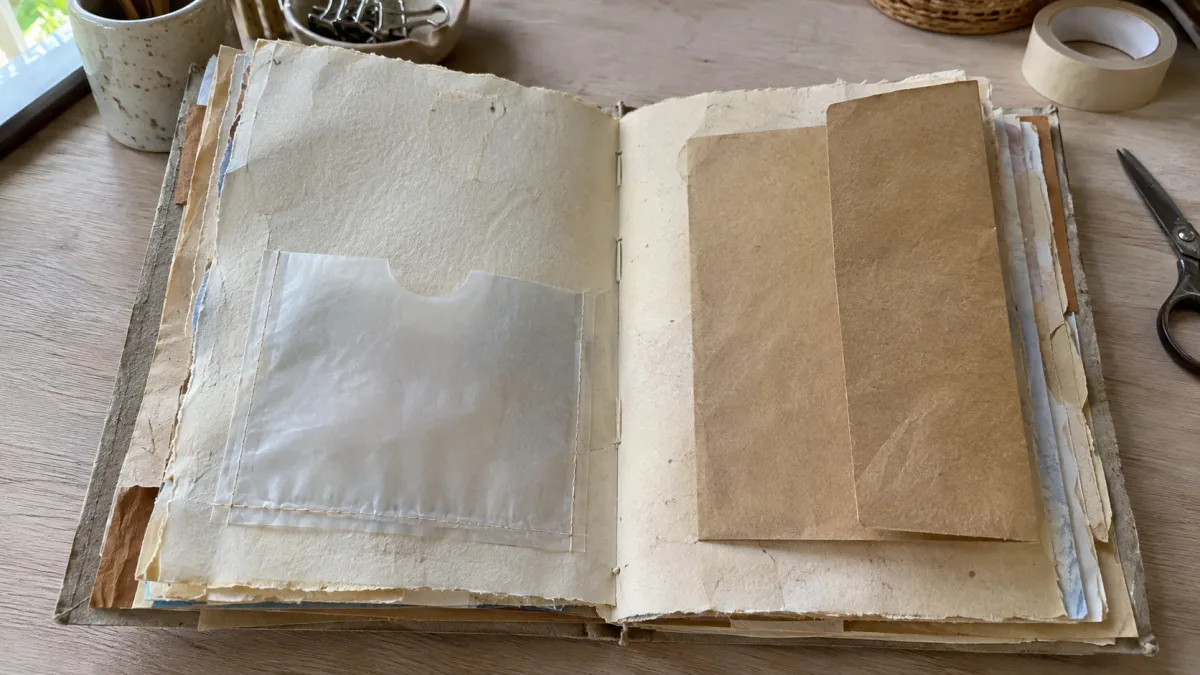
After: Two concert tickets tucked inside a folded glassine pocket on page one. A museum brochure trimmed along its fold line and tipped into the outer margin of page two as a swing-out flap. Three transit stubs glued in a staggered vertical column along the inner margin of page one. A handwritten note written directly on a lined paper tag and slipped behind the concert tickets.
All the original items are still there, with the bulk spread evenly across the gutter and margins. The pocket and foldout flap let you remove the ephemera and leave room for handwriting. The journal can also close flat.
Common Beginner Mistakes and Practical Solutions
The alligator mouth syndrome
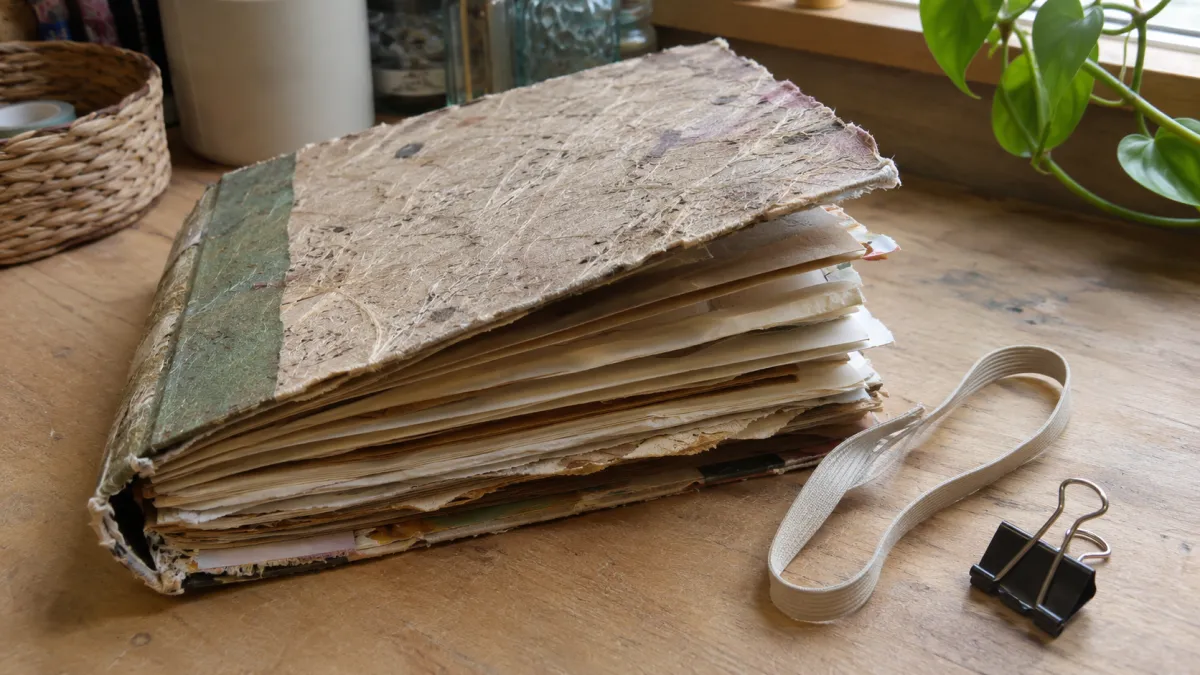
When you add layers of cardstock, pockets, tags, and dried botanical clippings to your pages, the outer edge grows thicker than the spine. The book springs open like a mouth and strains the stitching.
Solution: Spread thicker inserts through the journal instead of clustering them in one place. You can also use thinner papers like tissue and glassine for pockets, and secure the finished book with a simple elastic band or ribbon wrap.
Using excessive liquid glue
Standard white school glue contains a lot of water. Brush it across thin vintage book pages and they buckle, wrinkle badly, and curl. Those distortions remain after the glue dries.
Solution: Use a dry glue stick for lightweight paper ephemera. Apply glue in smooth, light strokes from the center outward onto a scrap sheet. For heavy cardstock or pockets that must hold weight, choose double-sided tape or a thin bead of bookbinding PVA glue applied sparingly with a small stiff brush.
Punching holes without clamping pages
If you hold the signature together with your hand while punching holes, the inner sheets can slide outward. Once you finish sewing, the center pages will be out of line with the cover.
Solution: Always clamp your signature securely with binder clips on both the top and bottom edges before marking or punching. Keep the needle perpendicular to the crease rather than angling it diagonally through the fold.
Overcomplicating the first project
Many beginners try to make a 300-page, five-signature leather volume on their first afternoon. Curved spines, hollow backings, and kettle stitches are a lot to learn at once. It is easy to get frustrated and leave the book unfinished.
Solution: Start with a single signature of ten sheets. A small book is easier to finish, and you can test adhesives on the papers you have before adding more layers.
Frequently Asked Questions
Is it disrespectful to cut up old books for junk journals?
Crafters generally avoid cutting up rare, signed, first-edition, or antiquarian volumes. Damaged, incomplete, or already discarded books offer pages for book arts without cutting apart a volume you would rather preserve.
Do I need to buy digital printables or vintage ephemera kits?
No. Commercial printable kits are popular online, but junk journaling began with finding uses for materials already at hand. Household junk mail, product packaging, handwritten notes, newspaper clippings, and old stationery can make a book of your own without costing anything. You can keep making journals this way without buying specialty printed supplies.
What is the difference between a signature and a page?
In bookbinding terminology, a folio is a single flat sheet folded in half. A signature (or section) is a group of folios nested inside one another to form a small booklet. A page is one side of a leaf within that signature. For example, a single folio folded down the middle produces two leaves and four printable or writable page surfaces.
How do I prevent my journal pages from tearing at the stitches?
Tearing along the fold occurs when sewing holes are punched too large, stitches are pulled too tightly at an angle, or paper is overly brittle. To reinforce fragile book pages, run a strip of washi tape or a scrap of linen cloth down the center fold before punching your sewing holes. When pulling your thread taut during binding, pull parallel to the spine fold rather than pulling straight upward against the paper edges.